

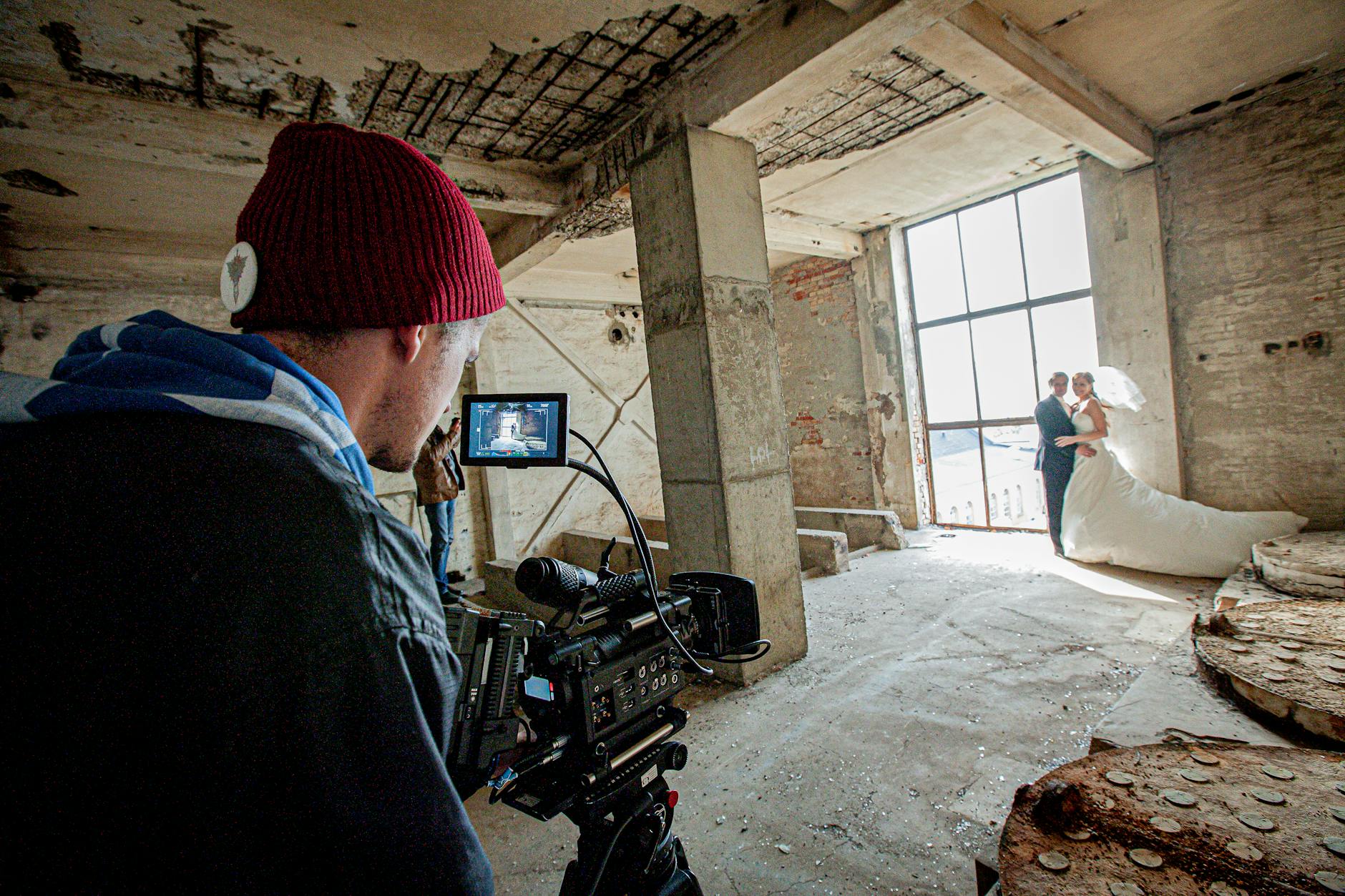
Most couples book based on a highlight reel and a price. The ones who ask these questions end up with something completely different.
Picture this. It’s your first anniversary. You sit down to watch your wedding film. The visuals are beautiful — cinematic golden hour footage, slow-motion first dance, sweeping drone shots over the venue. And then the ceremony starts. Your vows — the words you spent three weeks writing — are barely audible. The officiant’s microphone rustled throughout. Your partner’s voice breaks when they say “I do” and you can’t hear it. The speeches are underwater. You have a beautiful film of a wedding. You just can’t hear it.
Poor audio is the most common reason wedding films disappoint — and it’s entirely preventable by asking one question before you book. That’s just one of twelve that most couples never think to ask. The ones who do walk into their wedding day knowing the person behind the camera is exactly right for them. This guide gives you all twelve.
If you’re still building your wider supplier team, our guide to finding wedding suppliers you can actually trust covers the contract and deposit basics that apply to every booking you’ll make. And since your photographer and videographer will spend the whole day working side by side, our photographer guide is worth reading alongside this one.
01. Why Video Is Different to Photography
Your photographer will give you hundreds of images. Your videographer will give you one film — maybe two or three depending on your package. That film is the only thing that captures the full emotional experience of your day: the sound of your partner’s voice during vows, the laughter in the speeches, the atmosphere in the room during your first dance. Photographs show moments. Film makes you feel like you’re back there.
This is why the quality gap between a great wedding videographer and an average one is more noticeable than in almost any other supplier category. A slightly underwhelming photo can be forgiven. A wedding film with poor audio, generic editing, or a style that doesn’t match you will feel wrong every time you watch it — for the rest of your life.
Before you search: agree with your partner on the feeling you want from your film. Cinematic and dramatic, or natural and documentary? Long-form keepsake or short highlight film you’ll actually watch regularly? Knowing this shapes every conversation you have with a videographer and helps you spot immediately whether they’re the right fit.
02. The Three Main Styles — and Which One Is Right for You
Most couples don’t realise there are fundamentally different approaches to wedding filmmaking. Understanding the difference before you start searching will save you from booking someone whose aesthetic is completely different to what you want.
Cinematic
Heavily edited, colour-graded footage. Dramatic pacing, sweeping music, stylised shots. Feels like a movie trailer. Beautiful but sometimes less “real.”
Best for: couples who want drama and visual impact
Documentary
Captures events as they unfold. Natural lighting, candid moments, authentic audio. Feels like you’re reliving the day. Less stylised, more honest.
Best for: couples who want to feel it again
Hybrid
Combines both approaches. Cinematic production values with genuine documentary storytelling. The most popular style for UK weddings right now.
Best for: most couples
Super 8 / Film
Shot on film stock or digitally emulated. Warm, grainy, nostalgic. Has a deeply personal quality that digital footage rarely matches.
Best for: intimate, vintage-feeling weddings
💡
The full film test: always ask to watch a complete wedding film — not a highlight reel. A highlight reel is 90 seconds of the most beautiful footage set to a moving track. Anyone can make one look stunning. A full film shows you how a videographer tells a story, handles dull lighting, manages long speeches, and sustains quality across a whole day. That’s what you’re actually buying.
03. The 12 Questions to Ask Before You Book
01. Will it be you personally filming on the day — or will you send someone else?
Larger studios book under the company name and send a different videographer on the day. This isn’t automatically a problem — but you should know who will be there, meet them before the day if possible, and see their specific portfolio. The chemistry you have with your videographer affects how comfortable you feel being filmed, which directly affects the quality of your footage.
02. Can I watch a full wedding film — not just the highlight reel?
The most important question on this list. A highlight reel is marketing. A full wedding film is evidence of what you’ll actually receive. Watch at least two full films from the past 12 months, ideally from weddings with a similar style and venue type to yours. If a videographer can’t or won’t show you full films, find someone who will.
03. How do you capture audio — specifically for vows, speeches, and the ceremony?
This is the question videographers hope you won’t ask because the answer reveals whether they’re genuinely professional or not. The correct answer involves multiple redundant audio sources: lavalier microphones on the groom and officiant, a direct feed from the venue’s PA or DJ soundboard, and backup ambient recorders. If a videographer’s answer is “I use my camera’s onboard microphone” — walk away. Bad audio cannot be fixed in editing.
04What exactly is included in your package — and what costs extra?
Hours of coverage, number of videographers, highlight film length, full ceremony edit, speeches edit, drone footage, raw footage, delivery format — all of these can be included or excluded depending on the package. Get a written, itemised breakdown before you compare quotes. A quote that looks cheaper than others often doesn’t include things you’d assume were standard. Use our free wedding budget tracker to compare packages side by side.
05. How do you work alongside the photographer?
Your photographer and videographer will spend the entire day in the same spaces, often simultaneously. If they don’t communicate clearly and respect each other’s approach, you’ll end up with footage where the videographer is in the background of your best portraits, or the photographer’s flash keeps triggering during your first dance video. Ask directly how they coordinate — and whether they’ve worked with your photographer before.
06. Do you have experience at our venue — or with similar spaces?
A videographer who knows your venue already understands the light, the acoustics, the logistics, and the best positions for each key moment. If they haven’t been before, ask whether they’d do a recce or speak to the venue coordinator. Filming in a dark barn requires very different equipment and technique to filming in a bright glass-walled modern venue.
07. What is your plan for our specific must-have moments?
Your vows. The father of the bride speech. The moment you see each other. The reaction of your mum when you walk in. These moments cannot be recreated. Tell your videographer exactly what’s irreplaceable to you — and ask specifically how they’ll make sure to capture each one. A good videographer will take notes. A great one will have questions of their own.
08. How many cameras and videographers will be at the wedding?
One videographer with one camera can only be in one place at a time. If you want both partners getting ready filmed simultaneously, or multiple angles during the ceremony, you need at least two cameras. Larger and more complex weddings typically benefit from two videographers. Ask what’s included in your package and whether a second videographer is available as an add-on.
09. How and when do you back up the footage?
Losing wedding footage is a filmmaker’s nightmare — and it does happen. Professional videographers shoot to dual memory cards simultaneously and back up to at least two hard drives before leaving the venue. Ask specifically about their backup protocol. “I’ll be careful” is not the answer you’re looking for. “I shoot to dual cards and back up to cloud storage on the night” is.
10. What is the turnaround time for the final film?
Wedding films typically take 8–16 weeks to edit — longer during peak season. Some videographers offer a teaser or highlight clip within a few weeks, with the full film following later. Know what to expect so you’re not chasing for updates. Get the turnaround commitment confirmed in the contract — not just mentioned on a call.
11. How do you handle music licensing — and will my film be blocked on social media?
This question catches a lot of couples off guard. Many wedding films use unlicensed music, which means they’ll be muted or blocked when uploaded to social media. If sharing your film on Instagram or Facebook matters to you, ask explicitly whether the music is licensed through platforms like Musicbed, Artlist, or Soundstripe. A professional videographer will have a clear answer.
12. What is your backup plan if you can’t make it on the day?
Illness, family emergency, equipment failure — a professional videographer has thought about all of these. Ask for a specific contingency plan: a named colleague who would step in, what their style is like, and whether you’d meet them before the day. Any hesitation or vagueness here is a red flag. Your wedding day cannot be refilmed.
04. Audio — The Factor That Makes or Breaks a Wedding Film
It bears repeating because it’s the most overlooked aspect of wedding videography and the one couples most regret not asking about. Beautiful footage with poor audio is unwatchable. Perfect audio with average footage is still deeply moving. If you had to choose between the two, choose audio.
What good audio looks like: a lavalier microphone on the groom and/or officiant during the ceremony. A backup recorder on the altar or reading lectern. A direct feed from the DJ or PA system for speeches and reception music. Ambient room microphones as an additional layer. Every single one of these is standard practice for a professional videographer. If your videographer uses only their camera microphone — and many do — your vows will sound like they were recorded at the bottom of a swimming pool.
05. Red Flags Worth Knowing
⚑ They only show highlight reels — never full films.
Full films show whether a videographer can sustain quality, pace, and storytelling across a whole day. Highlight reels show whether they can edit 90 seconds of the best footage to a moving song. These are very different skills. A videographer who won’t show full films either doesn’t have them or doesn’t want you to see them.
⚑ Vague or no answer on audio capture.
Any professional videographer who has filmed more than a dozen weddings knows exactly how they capture audio and will tell you without hesitation. Vagueness here means either inexperience or corners being cut on equipment.
⚑ Their style is dramatically different to what you want but they say they can adapt.
Every videographer has a signature style that’s deeply embedded in how they film, not just how they edit. A hyper-cinematic filmmaker with a maximalist aesthetic cannot simply “tone it down” and produce a natural documentary film. Book someone whose existing work looks like what you want, not someone who says they can do it differently.
⚑ No mention of photographer coordination.
Your photographer and videographer need to work together. A videographer who has never considered this, or who brushes it off as obvious, is a videographer who has caused problems on someone else’s wedding day.
⚑ Dramatically below-market pricing.
Professional video equipment — cameras, audio recorders, lenses, lighting, editing software — is expensive. A videographer quoting significantly below market rate is almost certainly cutting corners somewhere. The most common places: equipment quality, audio capture, editing time, and backup redundancy. These are precisely the things you won’t notice until you watch the film.
⚠️On drone footage: drone shots look spectacular in wedding films and are frequently used in marketing. But drones require a Civil Aviation Authority (CAA) licence to operate commercially, and many venues don’t allow them due to noise restrictions, flight path proximity, or listed building constraints. Always check with your venue before assuming drone footage is an option — and confirm your videographer holds the relevant licence.
06. Your Pre-Booking Checklist
- Confirmed it will be this specific videographer on the day
- Watched at least two full wedding films — not just highlight reels
- Asked specifically about audio capture and received a detailed answer
- Received a written, itemised quote covering all deliverables
- Understood how they coordinate with your photographer
- Asked about backup and footage redundancy protocols
- Confirmed the turnaround time in writing
- Asked about music licensing and social media compatibility
- Confirmed whether drone footage is possible at your venue
- Understood the backup plan if they can’t make it on the day
- Read the contract including cancellation and postponement terms
- Checked reviews on Hitched, Bridebook, and Google
The right wedding videographer gives you something you genuinely didn’t know you needed until you have it — the ability to hear your partner say “I do,” to watch your dad’s face when you walk in, to feel the whole day again rather than just see fragments of it. That’s worth taking the time to find properly. Ask the questions. Watch the full films. And trust the one who makes you feel most confident that your day will be in safe hands.
xoxo
Far
Leave a Reply